
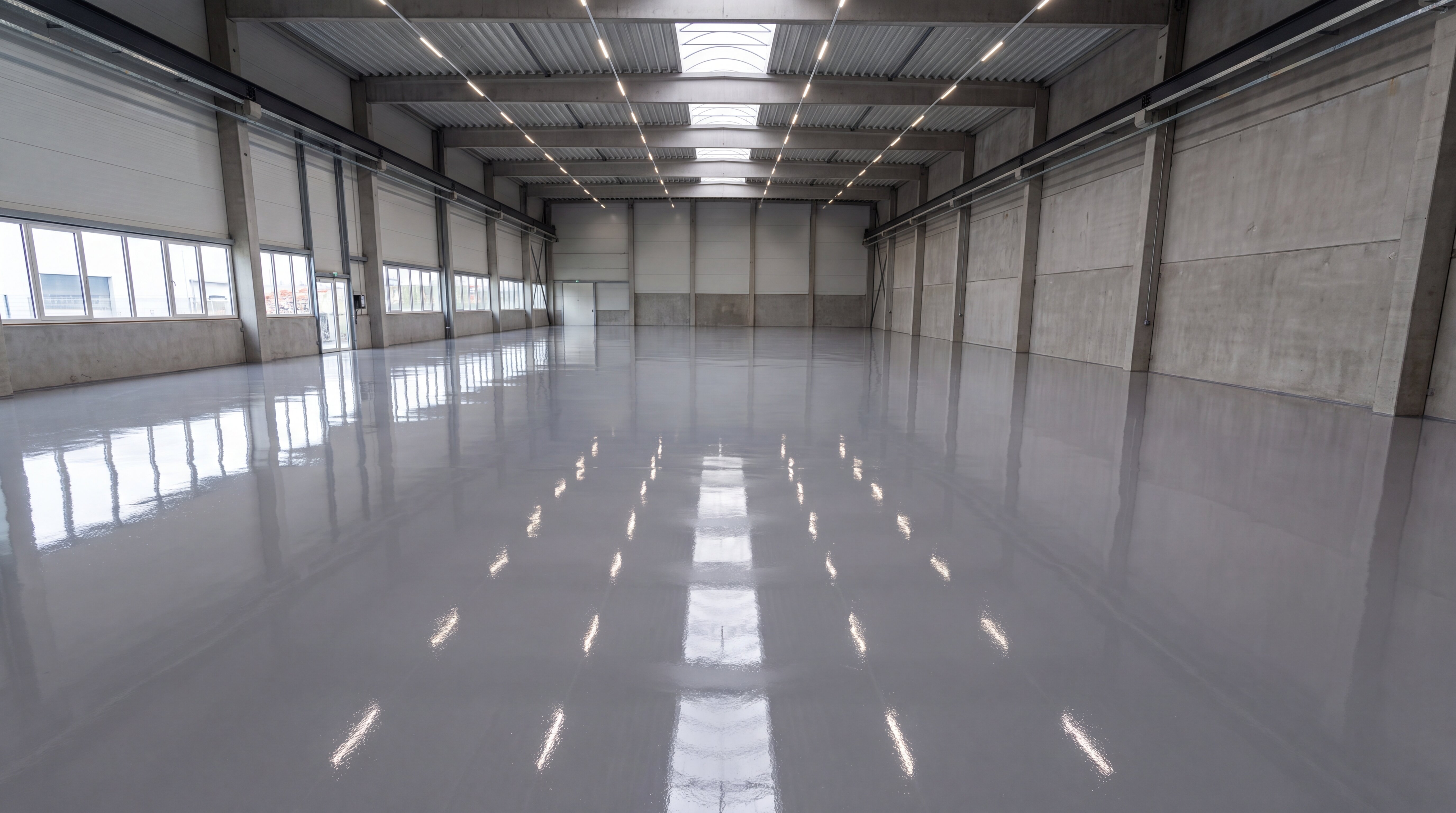
How Long Does Resin Flooring Last? Lifespan by System
Resin flooring is an investment designed to last decades. But the true lifespan depends entirely on the system you choose, how well it is prepared, and how you maintain it.
Lifespan by System Type
Not all resin floors are created equal. A thin-coat paint will not last as long as a 9mm screed. Here are the realistic life expectancies for professional installations:
- Epoxy Coating (0.2–0.5mm): 5–10 years in domestic garages; 3–7 years under heavy commercial traffic.
- Epoxy Self-Smoothing (2–3mm): 10–20 years in showrooms, retail, and domestic spaces.
- Polyurethane (PU) Screed (6–9mm): 10–25 years in harsh industrial environments and commercial kitchens.
- Poured Resin Comfort Floors (3–6mm): 15–25 years in residential living spaces with normal foot traffic.
- Microcement (2–3mm): 10–20 years with proper maintenance and periodic resealing.
What Shortens Lifespan
When resin floors fail prematurely, it is almost never the fault of the resin itself. Failure is usually down to:
- Poor substrate preparation: Applying resin over dusty, un-ground, or damp concrete guarantees delamination (peeling). We mechanically prepare every floor via diamond grinding or shot-blasting.
- Incorrect system choice: Putting a rigid epoxy floor in an area subjected to thermal shock (like a bakery) will cause cracking.
- Skipped primers: Primers penetrate the concrete and create the chemical bond for the topcoats. Skipping them saves money initially but ruins the floor's lifespan.
- Inadequate maintenance: Allowing grit and dirt to act like sandpaper under forklift wheels or shoes will prematurely dull the protective topcoat.
Maintenance That Extends It
Resin is low-maintenance, not no-maintenance. Follow these simple steps:
- Sweep regularly: Remove dirt and grit before it can be ground into the surface.
- Mop with neutral cleaners: Use warm water and pH-neutral detergents. Avoid harsh bleach, ammonia, or abrasive scouring pads.
- Protect the surface: Use felt pads under heavy furniture in residential settings. Avoid dragging heavy pallets across industrial floors.
- Clean up chemical spills quickly: While highly resistant, leaving harsh acids or solvents pooled for days can eventually stain or etch the surface.
When to Recoat vs Replace
The beauty of resin is its repairability. You rarely need to replace the entire system.
If the floor has lost its gloss, looks dull, or has light surface scratches, it simply needs a recoat. We lightly abrade the surface and apply a fresh polyurethane or epoxy topcoat, restoring it to brand-new condition for a fraction of the original cost.
If the floor is fundamentally delaminating, suffering structural cracking, or peeling away in sheets (usually due to poor initial installation by others), it requires full removal and replacement.
Read more about our Resin Floor Repair and Refurbishment services.
Frequently Asked Questions
Want a Floor That Lasts?
Get in touch to discuss the right system for your project.