
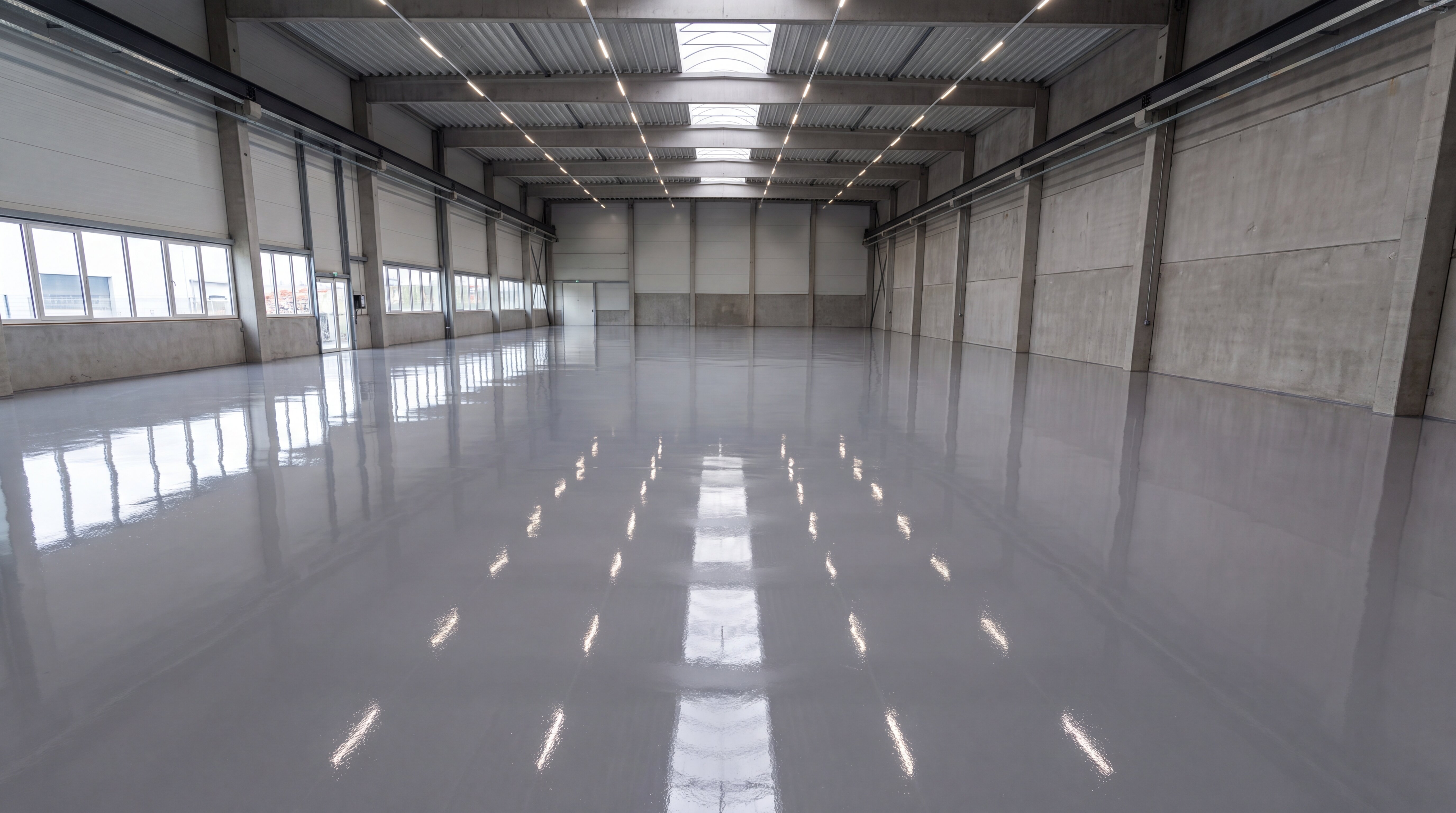
Food and Beverage Flooring in Surrey
Food and beverage facilities are the most demanding resin flooring environment that exists. The floor must simultaneously withstand thermal shock from high-pressure steam cleaning and boiling process liquids, resist aggressive organic acids including lactic acid in dairy, citric acid in soft drinks, and acetic acid in pickling, handle constant wet conditions that create slip hazards, integrate seamlessly with stainless steel drainage infrastructure, and meet HACCP and BRC audit requirements. No single material ticks all of these boxes except heavy-duty polyurethane screed. Getting the system wrong means a failed floor within months and a potential food safety breach.
The detail that separates adequate food production flooring from genuinely reliable food production flooring is the drainage integration. Water, process liquids, and cleaning chemicals must flow to drains without pooling, and the joint between the resin floor and the stainless steel drainage channel must be completely watertight. On every food facility project we undertake across Surrey, we cut anchor grooves around each drain, prime the exposed steel, and pack the PU screed tightly into the groove to create a mechanical lock. We recently stripped out a failed epoxy floor at a food-processing unit in the Horley logistics corridor that had been destroyed by steam cleaning, and replaced it with a 9mm PU screed. The correct specification should have been installed from day one.
Food and Beverage Flooring in Surrey Installation Process
Deep Substrate Preparation
Food facility substrates are frequently contaminated with years of fat, sugar, protein, and CIP chemical residue. We use heavy diamond grinding or shot blasting to remove all contamination from the concrete surface. Severely contaminated areas may require multiple grinding passes and a specialist degreasing primer to achieve a bondable surface.
Drainage Channel Anchoring and Integration
We cut anchor grooves, 10mm wide by 10mm deep, around the perimeter of every stainless steel drainage channel, gully, and floor inlet. The exposed concrete and steel are primed, and the PU screed is packed tightly into these grooves during application. This mechanical anchoring creates a watertight junction that prevents any liquid migration beneath the floor.
Perimeter Coved Skirting
Resin coved skirting is installed at 100mm height around all perimeter walls, column bases, and fixed equipment plinths. The 50mm radius eliminates the floor-to-wall junction that harbours bacteria and prevents effective wash-down. In BRC-audited facilities, coved skirting is a mandatory hygiene requirement.
Zone-Specific PU Screed Application
Polyurethane screed is trowelled on at thicknesses specified by zone: 6mm in dry storage and packaging areas, 9mm in wet processing, cooking, and wash-down zones. Anti-slip aggregate is broadcast at a density matched to the slip risk of each zone, lighter in dry packaging, heavier at R12 to R13 in constantly wet processing areas.
Sealing and Final Surface Treatment
The completed screed is sealed with a chemical-resistant polyurethane topcoat that closes surface porosity without compromising the anti-slip profile. In facilities requiring active antimicrobial performance, a topcoat incorporating silver-ion technology is applied. The finished surface is non-porous, HACCP-compliant, and tested for slip resistance before handover.
Systems and Options
Food production requires systems specified to the exact chemical and thermal demands of each zone:
- Heavy-Duty PU Screed at 6 to 9mm: The industry-standard system for all active food processing areas. Thermally stable to 120°C at 9mm. Resistant to lactic acid, citric acid, acetic acid, animal blood and proteins, vegetable and animal fats, and all standard CIP chemicals including caustic soda up to 30% concentration. Compressive strength exceeds 50 N/mm².
- Antimicrobial PU Screed: The same system with active silver-ion technology integrated into the resin matrix. Silver ions continuously inhibit bacterial cell reproduction on the surface, reducing pathogen load between scheduled cleaning cycles. Specified for ready-to-eat food production, dairy processing, and any environment where surface contamination risk is elevated.
Benefits of Food and Beverage Flooring in Surrey
- Withstands high-pressure steam cleaning and thermal shock up to 120°C at 9mm thickness
- Resists lactic acid, citric acid, acetic acid, blood, animal fats, sugars, and CIP cleaning chemicals
- HACCP-compliant seamless surface with no joints, ledges, or crevices for bacteria or food debris to accumulate
- Anchor-grooved drainage integration provides fully watertight junctions with stainless steel channels
- Coved skirting eliminates floor-to-wall bacterial harbourages and meets BRC audit requirements
- Zone-specific anti-slip ratings from R10 to R13 matched to actual slip risk in each area
- Antimicrobial variant actively inhibits bacterial growth between cleaning cycles
- Phased installation available to keep production operational throughout the works programme
Who Is Food and Beverage Flooring in Surrey Suitable For?
We work with breweries, dairy processing plants, soft drink manufacturers, meat and poultry processors, commercial bakeries, and large-scale food packaging facilities across Surrey. The Horley logistics and food production corridor has several facilities we have worked with on repeat visits as their operations expanded. Breweries and distilleries in the Farnham and Guildford areas present a specific combination of acidic wort spillage, steam cleaning, and constant wet-floor conditions that require the full 9mm PU screed specification.
We also work with food manufacturers preparing for BRC or SALSA accreditation, where the hygiene requirements of the audit process sometimes reveal that the existing floor does not meet the standard. In these cases, we survey the existing floor, identify exactly which requirements are not met, and propose either a targeted refurbishment or a full replacement depending on the condition of the current substrate. Proactive engagement before the audit is always more cost-effective than reactive repair after a failed inspection.
Frequently Asked Questions
Ready to Get Started?
Request a free, no-obligation survey and quote. We cover all of Surrey and the South East.