
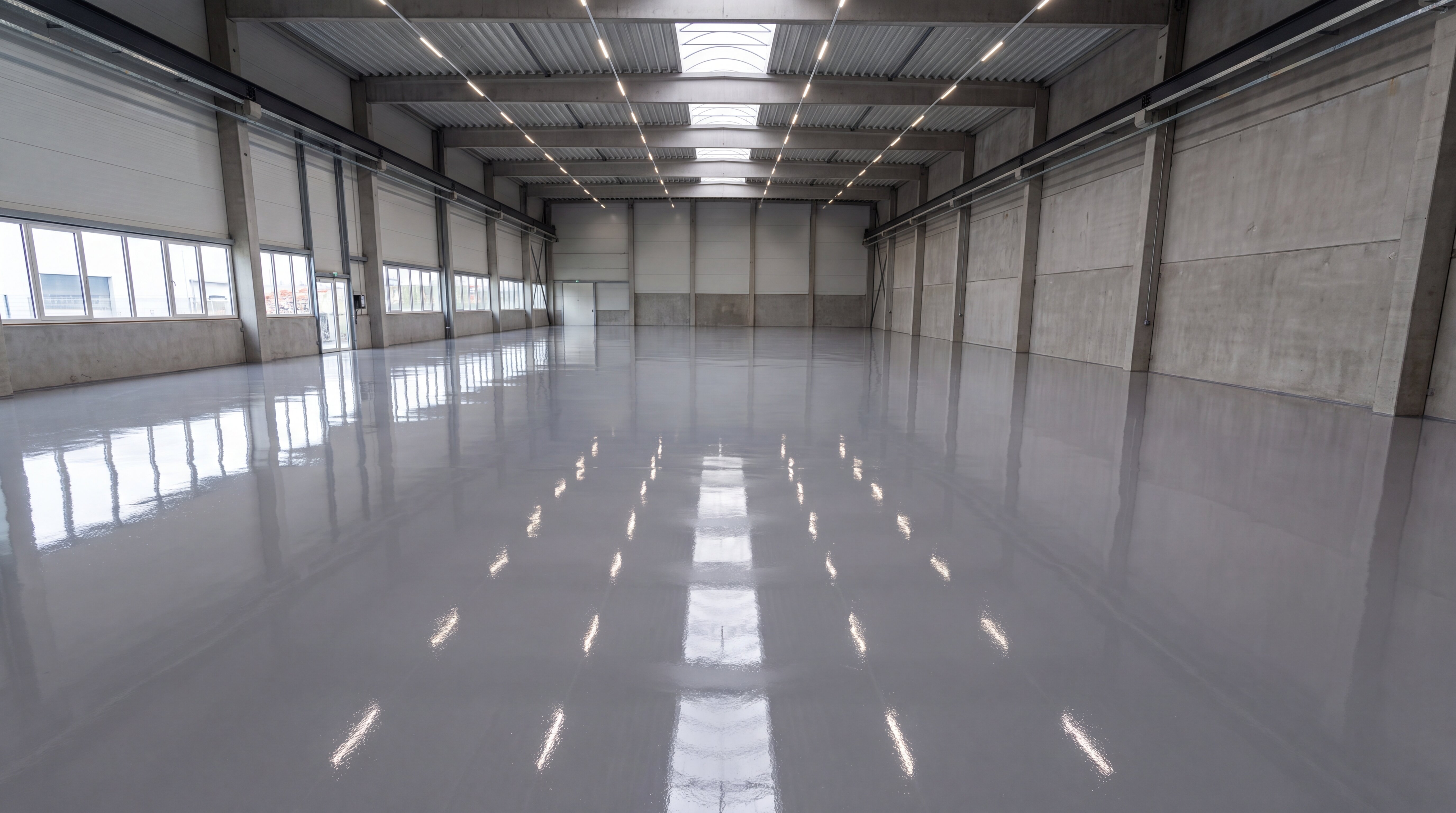
Epoxy vs Polyurethane Resin Flooring: Which Is Right for You?
They look similar, but beneath the surface, epoxy and polyurethane (PU) resins perform very differently. Choosing the wrong one can lead to early floor failure.
Epoxy and polyurethane are the two most common types of resin flooring. Both are highly durable, seamless, and hygienic, making them popular across residential and commercial sectors. However, their unique chemical properties dictate where they should—and shouldn't—be used.
Chemistry & Hardness
Epoxy is a two-part system (resin and hardener) that cures to an extremely hard, rigid surface. It boasts exceptional compressive strength, meaning it can withstand incredibly heavy point loads without denting.
Polyurethane (PU) is also a two-part system, but it cures with a slight elasticity. It isn't soft, but it is flexible enough to absorb impacts that might chip or crack an epoxy floor. This flexibility also makes PU "softer" and more comfortable underfoot for residential spaces.
Temperature & Thermal Shock
This is the most critical difference between the two systems.
Because epoxy is rigid, it cannot expand and contract quickly. If exposed to rapid temperature changes—such as boiling water from a commercial cooking kettle hitting a cold floor—epoxy will often micro-crack or delaminate from the concrete base. This is known as thermal shock.
Polyurethane screeds are designed specifically for thermal shock resistance. They expand and contract with the concrete substrate, preventing failure in extreme environments. Additionally, PU resins are UV-stable, meaning they won't yellow or fade when exposed to direct sunlight, unlike standard epoxy systems which require a protective topcoat outdoors or in sunny conservatories.
Chemical Resistance
Both systems offer excellent resistance to oils, fuels, and everyday cleaning chemicals.
However, PU has the edge when it comes to extreme chemical resistance, particularly against organic acids (like lactic acid found in milk). This is why PU screeds are the mandatory standard in food and beverage production, breweries, and dairies.
Typical Applications
- Epoxy is best for: Domestic garages, workshops, warehouses, aviation hangars, and showrooms. Any indoor area with heavy static loads but stable temperatures.
- Polyurethane is best for: Commercial kitchens, bakeries, breweries, outdoor applications, and residential comfort floors over underfloor heating.
Cost Comparison
Epoxy coatings and self-smoothing systems are generally less expensive per m² than PU systems. A heavy-duty 9mm PU screed is a specialist, highly engineered product that requires more material and labour, reflecting a higher initial investment. For a detailed breakdown, see our pricing guide.
Summary Comparison
| Feature | Epoxy | Polyurethane (PU) |
|---|---|---|
| Hardness | Very rigid, high compressive strength | Slightly flexible, high impact resistance |
| UV Stability | Poor (yellows without topcoat) | Excellent (UV stable) |
| Thermal Shock | Poor (prone to cracking) | Excellent |
| Cost per m² | Lower to Medium | Medium to High |
Frequently Asked Questions
Need Expert Advice?
Our surveyors will specify the perfect system for your environment.